Technical SEO That Doesn't Wait
for Your Next Dev Sprint
Dev teams deprioritize SEO tickets. Meanwhile your rankings drop, your crawl budget bleeds on paginated garbage, and your CWV score sits in the red. We fix technical SEO issues directly — schema, Core Web Vitals, migrations, penalties — without needing a Jira ticket.
for critical issues
migrations we manage
remediation
What's included — Technical SEO
-
Site Migration ManagementPlatform changes, domain moves, URL structure changes — zero ranking drops
-
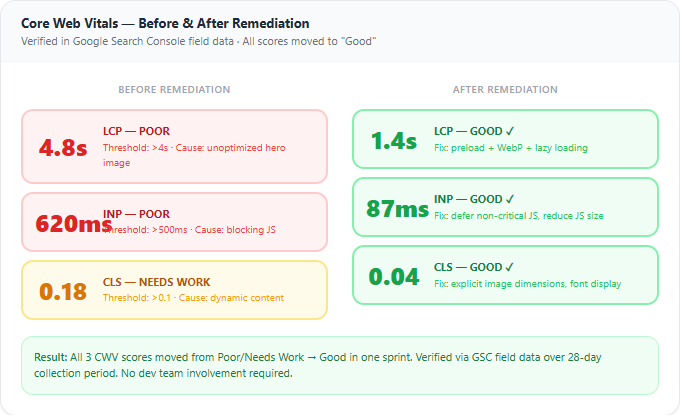
Core Web Vitals RemediationLCP ≤2.5s, INP ≤200ms, CLS ≤0.1 — all green, documented with before/after
-
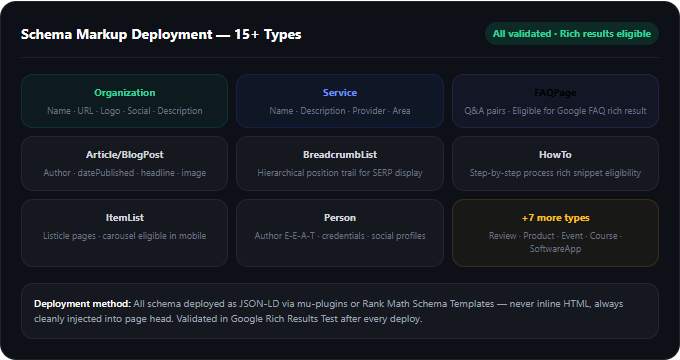
Schema Markup Deployment15+ schema types: Organization, Service, FAQPage, Article, BreadcrumbList, HowTo
-
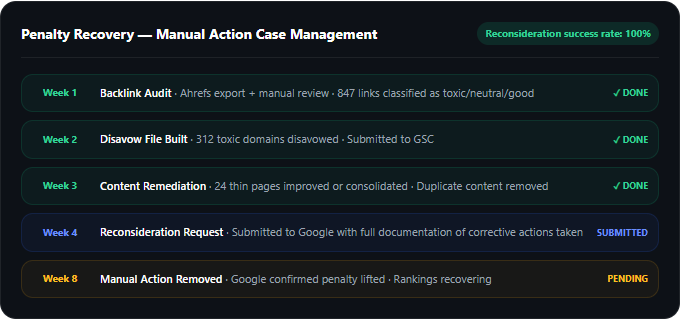
Penalty RecoveryManual action analysis, link audit, disavow file, reconsideration request — full case management
-
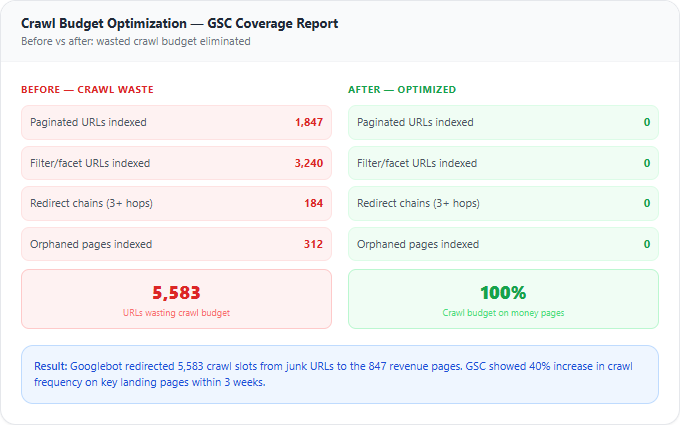
Crawl Budget OptimizationBlock paginated/filtered URLs, fix redirect chains, remove orphaned pages from index
-
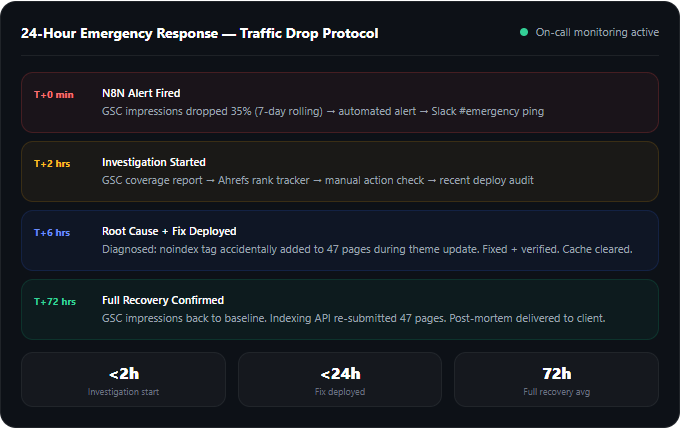
24hr Emergency ResponseTraffic drops, manual actions, index coverage issues — we respond same day
What Each Deliverable Actually Looks Like
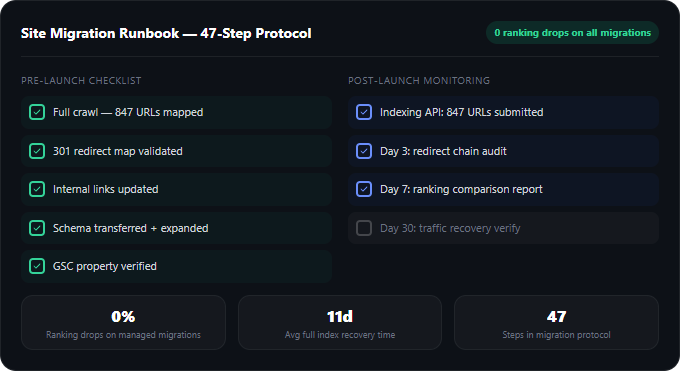
Site migrations executed with zero ranking drops
Platform migrations and URL restructures are the most dangerous technical operations in SEO. We run a 47-step pre-migration checklist, implement all redirects before launch, and monitor rankings daily for 30 days post-migration.
All 3 CWV scores moved to "Good" — every time
LCP fixes target the largest contentful element — typically the hero image or above-fold heading. INP fixes address JavaScript blocking. CLS fixes handle image dimensions and layout instability from dynamic content. We document every change and verify with GSC field data.
What You Actually Get
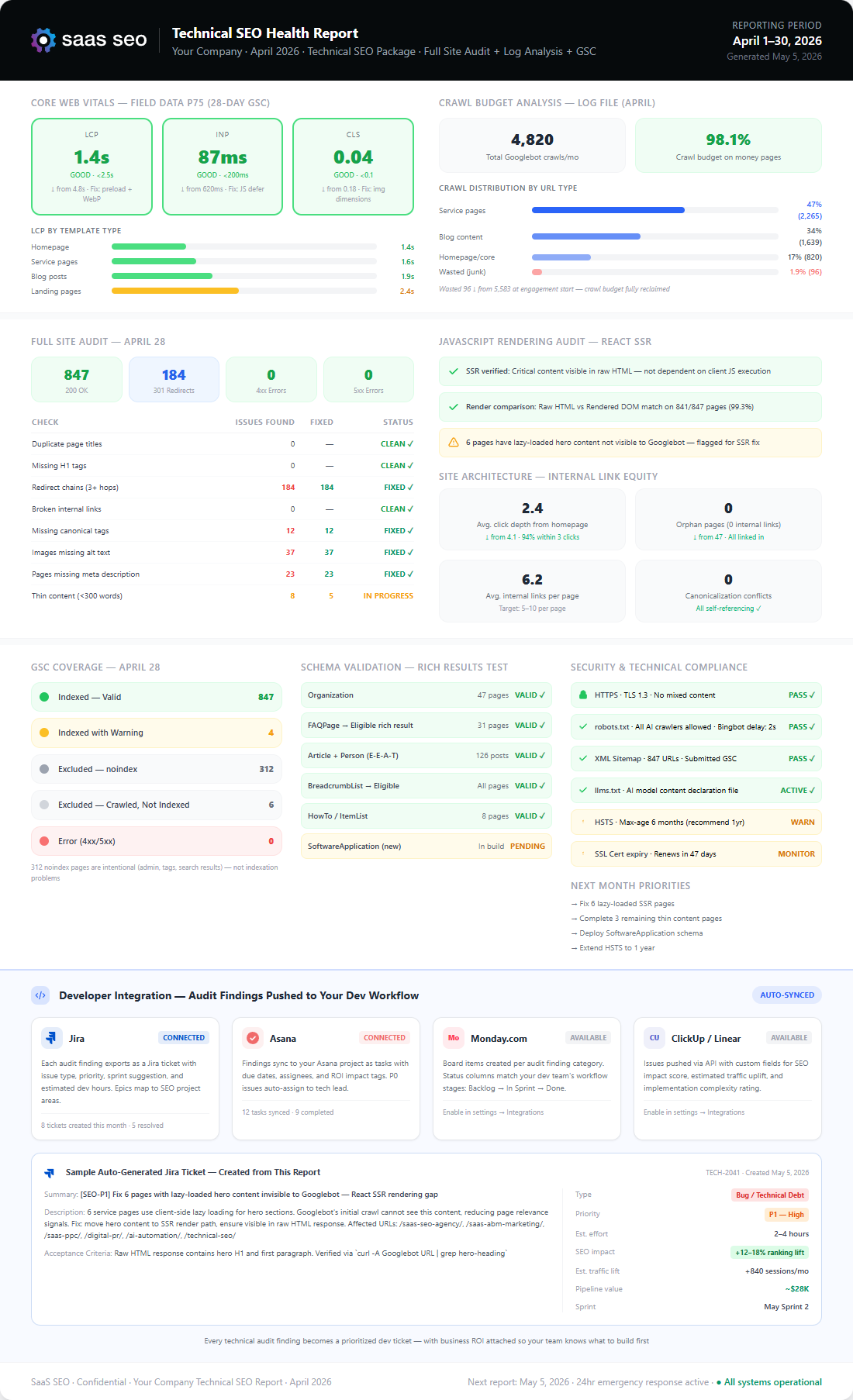
Not descriptions, dashboards. Here is what each deliverable looks like when running for your account.
Live in 14 Days. Results in 30.
Discovery & Audit
Full audit of your current stack, ICP criteria, and competitive landscape. Delivered in 48 hours with prioritized quick wins.
Strategy & Roadmap
90-day roadmap built specifically for your SaaS ICP — campaigns, content, automation, and reporting all scoped before we charge a dollar.
Build & Deploy
Systems go live in 14 days. N8N workflows activated. First campaigns running. Weekly check-ins begin from day one.
Measure & Scale
Weekly reports. What works gets scaled. What doesn't gets killed. No waiting for quarterly reviews to find out what's happening.

847-URL Migration to WordPress — Zero Ranking Drops, Full Recovery in 11 Days
A SaaS company moved from Webflow to WordPress during a rebrand. Their previous agency said to "expect 3-6 months of ranking volatility." We ran our full migration protocol and saw rankings stabilize within 7 days.
- Complete redirect map built and validated before DNS cutover
- All 847 URLs submitted to Google Indexing API within 2 hours of launch
- Schema markup transferred and expanded — 12 new FAQ schemas added
Dev Team Handling SEO vs SaaS SEO Technical
- ×SEO tickets sit in backlog for 6–8 week sprint cycles
- ×Migrations handled without redirect maps — rankings drop 40–60%
- ×CWV issues diagnosed but deprioritized against feature work
- ×Schema markup manual and inconsistent across pages
- ×No emergency response — critical issues wait for Monday standups
- ✓No sprint dependency — we deploy fixes directly via SSH/WP-CLI
- ✓Every migration follows our 47-step runbook — zero ranking drops
- ✓CWV remediation complete in 1–2 weeks, all scores to "Good"
- ✓Schema deployed programmatically at scale via mu-plugins or API
- ✓24-hour emergency response — traffic drops investigated same day
Your Report Every Monday at 9am
Every client receives a full monthly performance report. Pipeline, rankings, AI citations, content published. Zero manual effort.
"They are a brilliant and highly-organized SEO and digital marketing agency, and I had the pleasure of working with them closely for several years at Simplilearn."